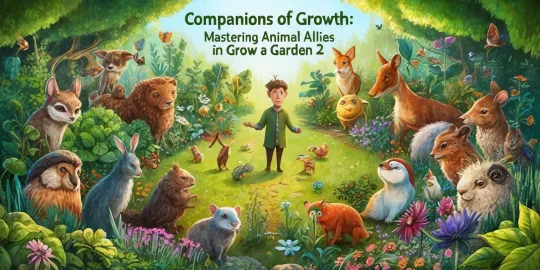
In Grow a Garden 2, the addition of animal companions changes the way players experience their virtual plots. These charming helpers not only provide visual delight but also influence gameplay by offering unique bonuses and interactive features. Each pet boasts a unique suite of capabilities designed to elevate your in-game strategy, whether by speeding up growth, extending vision at night, or providing protection during vulnerable times. Navigating the world of these companions requires both resource management and a sense of adventure, as some creatures bring special perks while others offer aesthetic enjoyment. The world of Grow a Garden 2 is intricately designed so that pets become indispensable partners, and understanding their functionality can transform a casual visit into a dynamic garden experience.
Understanding the Role of Companions in Garden Management
Within the framework of Grow a Garden 2, animal companions are more than just decorative figures; they are integral to efficient garden management. Each creature bestows distinctive advantages often related to garden upkeep, security, and productivity. For instance, some pets help to deter unwelcome visitors or even intervene in playful mischief by intercepting intrusions. These features They don't just serve a practical purpose—they also introduce an extra strategic dimension for players decide which pet best suits their gardening style. The integration of these pets into the general gameplay transforms routine tasks into engaging challenges. The way these companions interact with the garden environment also encourages exploration, making every session in the game more dynamic and interactive.
Navigating the Process of Pet Acquisition
Acquiring a pet in Grow a Garden 2 is crafted to combine user-friendliness with a captivating experience process is simple yet requires a careful approach because pets come at a cost, measured in Sheckles, the game’s currency. Players can interact with a pet by approaching it and initiating a conversation, which signifies the start of their partnership. However, the acquisition method comes with its nuances: once a player reaches an animal and completes the transaction, the pet begins its journey towards the garden instead of instantly appearing in the inventory. Players must then access the Pets tab in their inventory to equip the new companion. This layered process balances simplicity with the anticipation of a living, moving character enriching the gaming experience.
Distinct Functionalities and Hidden Bonuses of Each Creature
Every pet in Grow a Garden 2 comes with a specific set of skills intended to benefit the player in unique ways. For example, a pet may boost walking or jumping speeds, extend night-time visibility, or even accelerate the growth rate of plants. Such varied functionalities require players to weigh their decisions carefully. The pets are categorized by rarity; rarer pets have the potential to offer more beneficial bonuses that can significantly improve gameplay. Moreover, some pets exhibit functionalities that are more aligned with defensive strategies, such as repelling unwanted visitors, while others serve an offensive role by redistributing resources across gardens. The multi-dimensional utility of these companions creates an immersive experience that encourages strategic planning and thoughtful investment.
The Impact of Rarity on Pet Skills and Game Dynamics
The rarity of a pet in Grow a Garden 2 is a key indicator of its potential impact on gameplay. Lower-tier companions, classified as common, offer modest enhancements that are ideal for beginners to the game. In contrast, uncommon and rare pets bring enhanced skills that provide strategic advantages in various aspects of garden management. Legendary and mythic companions stand at the pinnacle of rarity, boasting abilities that can transform the pace and style of gameplay by offering significant boosts such as improved resource collection or unexpected defensive maneuvers. Understanding the rarity dynamics is essential for players as they allocate resources and prioritize their pet ventures. Such categorization not only adds depth to the selection process but also ensures that each acquisition clearly affects progression.
Exploring the Versatile Traits of the Frog and Bunny
The common pets, Frog and Bunny, serve as an excellent introduction to the mechanics of pet abilities in Grow a Garden 2. The Frog is lauded for its capacity to enhance jump height, lending a boost to overall mobility within the garden space. Meanwhile, the Bunny offers a similar ease of access to the game by increasing the pace at which a garden is traversed, making everyday tasks feel more fluid. Both creatures provide an entry point into the affirmative use of animal support, even if they come with modest benefits compared to rarer pets. Their affordable pricing in Sheckles makes them accessible to Gamers who are new to the scene or eager to advance further to diversify their in-game strategies without a heavy initial investment. Their presence renders the early stages of the game more engaging and enjoyable.
Appreciating the Nighttime Vigil of the Owl and the Growth Boost of the Deer
The Owl and the Deer bring a distinct flavor of support to the nocturnal and botanical aspects of garden care in Grow a Garden 2. The Owl, an uncommon asset, extends the player’s view during the night, a crucial feature when most in-game activities slow down or become more hazardous. It also provides audible cues when a rarer pet makes an appearance, enriching the sensory experience of gameplay. Along with it, the Deer supports productivity by accelerating plant growth, leading to a more bountiful harvest. These pets not only highlight the variety of challenges within the game but also illustrate how companions can blend aesthetics with utility. Their dual benefits underscore the importance of balancing defensive and productive strategies when managing the garden at all hours.
Delving into the Whimsical Powers of the Robin and Bee
The Robin and Bee are among the cherished legendary additions in Grow a Garden 2, and they bolster the gameplay with both enhanced functionality and delightful aesthetics. The Robin introduces a unique aerial element to garden care by fluttering around and engaging with ripe fruits, occasionally dropping seeds that could further enrich the garden's yield. Its adaptability has made it a preferred choice for countless people players. Conversely, the Bee takes on a more defensive role by actively warding off intruders through its collective swarming behavior. Although both creatures fit into the legendary category, their roles are distinctly different—one enhancing production and the other ensuring the garden's integrity. These nuanced roles make Ultimately, selecting between them comes down entirely to individual taste preference and strategic need.
Exploring the Mythic Realm: Monkey, Golden Dragonfly, and Unicorn
The mythic pets such as the Monkey, Golden Dragonfly, and Unicorn elevate the gaming experience to new heights in terms of both skill set and rarity. The Monkey becomes an active helper by picking ripe fruit and delivering it directly to the player, thus automating a portion of the harvest process. The Golden Dragonfly stands out with its ability to amplify the chance of discovering a Gold mutation among plants and fruits, greatly enhancing resource value. Meanwhile, the Unicorn doubles the likelihood of plants or fruits exhibiting the rare Rainbow mutation, adding both aesthetic charm and potential economic benefit. Their mythical status is underscored by the dramatic improvements they lend to everyday tasks, and the decision to invest in these pets is often critical for players who aspire to fully harness the complete range of possibilities offered by their virtual environment gardens.
Uncovering the Mystery of the "Big" Pet Mutation
An intriguing aspect of pet selection in Grow a Garden 2 is the unique mutation that can give certain pets a "Big" appearance. This rare occurrence, while not altering the cost or basic acquisition process, provides these creatures with slightly enhanced abilities. For instance, players have observed a larger variant of the Owl, which retains its nocturnal and view-extending benefits but in a more pronounced manner. The prospect of encountering a bigger version of a pet brings an added injects a burst of unpredictability and energy into the game, offering both visual impact and functional benefits. The rarity of this mutation means that while most pets will appear in their standard size, the occasional Big pet offers a delightful bonus, making each acquisition moment unpredictable and inherently rewarding.
Strategic Resource Management and Pet Investment
In a game where currency plays an essential role, effective resource management becomes paramount when selecting the right pet. Sheckles, the in-game currency, is the medium through which players can unlock companions with specialized abilities. The variety of costs—from modest fees for common pets to monumental sums for legendary and mythic creatures—requires a well-considered approach to budgeting. For beginner players, investing in a pet with a balanced set of enhancements can pave the way for smoother gameplay and gradual advancement. Consequently, each pet represents It provides not just a practical enhancement, but also a financial decision that impacts long-term strategy. This intricacy adds another layer to the gaming experience, as players must constantly weigh immediate benefits against future potential gains.
Strategizing Pet Investments for Skill Synergy
Choosing the best companion in Grow a Garden 2 is an exercise in strategic planning, where each pet offers a blend of skills that can complement the overall game plan. For new players, a pet characterized by balanced enhancements is often recommended. Many seasoned players point to the Robin as a cost-effective option that grants numerous benefits without an exorbitant investment. Later in the game, when resources have been steadily acquired, aiming for pets like the Bee or those with mythic attributes can significantly bolster your garden’s defenses and productivity. Individual preferences come into play, as some players might prefer a pet that focuses on improving resource collection, while others lean towards defensive or exploratory abilities. The careful selection and timely acquisition of these companions ultimately fosters a more engaging and multifaceted gameplay experience, Motivating players to regularly revise their tactics to evolving challenges.